

The 2026 concept of a modern office has evolved. It is no longer just a place to sit at a desk; it is a high-performance ecosystem where mental clarity, sustainability, and brand identity collide. At Ambius UK, we have seen a significant shift: plants have moved from being nice-to-have decor to essential living architecture.
Whether you are managing a corporate headquarters or a retail store, this guide explores how to style your workspace with intention, from the humble desk plant to a green living wall.
Scaling Your Greenery: Choosing the Right Size
One of the most common mistakes in commercial interior design is under-sizing. A tiny succulent placed on a large boardroom table will not deliver the required biophilic benefits.
- Large Indoor Potted Plants: These are anchor pieces. Use them in lobbies, at the end of desk banks or in empty corners. In 2026, the trend is moving towards architectural giants such as the Ficus lyrata (Fiddle Leaf Fig) and the Strelitzia nicolai (Giant White Bird of Paradise) to create an immediate impact.
- Small Indoor Plants: Reserve them for individual workstations or hot desks. Think of these as personal wellness boosters that break up the clinical feel of monitors and hardware.
- Pro Tip: Always follow the Rule of Three. Grouping plants of varying heights (floor, shelf, and desk) creates a jungle layer effect that feels more organic.
Low-Light Legends for UK Offices
British winters and deep floor plates often mean natural light is at a premium. Choosing recommended indoor plants that can thrive under artificial LED light is crucial for longevity and value for money.
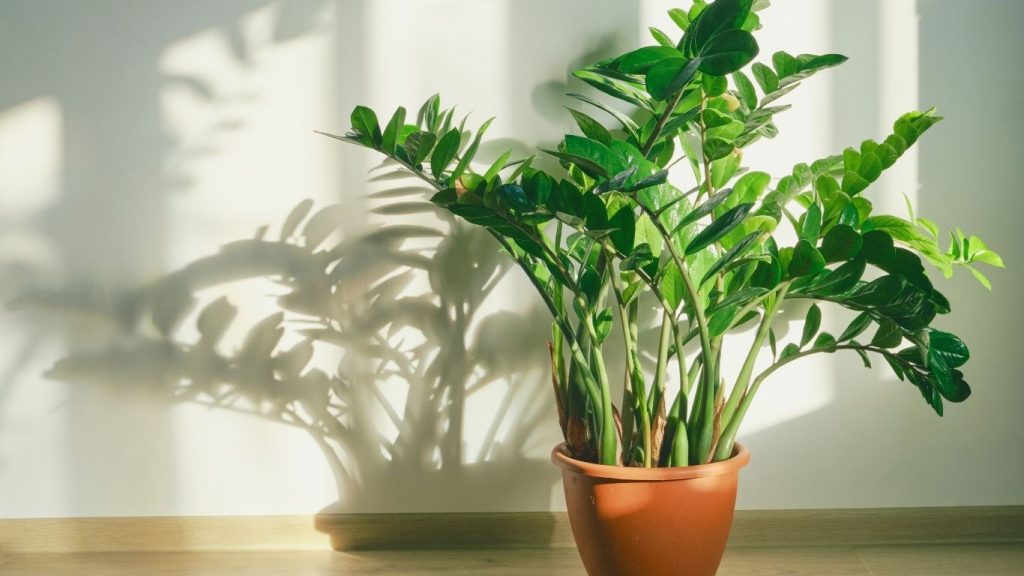
ZZ Plant (Zamioculcas zamiifolia)
- Light Requirement: Very Low
- Why it works: It only needs watering once a month and is hardy enough to thrive in windowless basements or areas with purely artificial light.
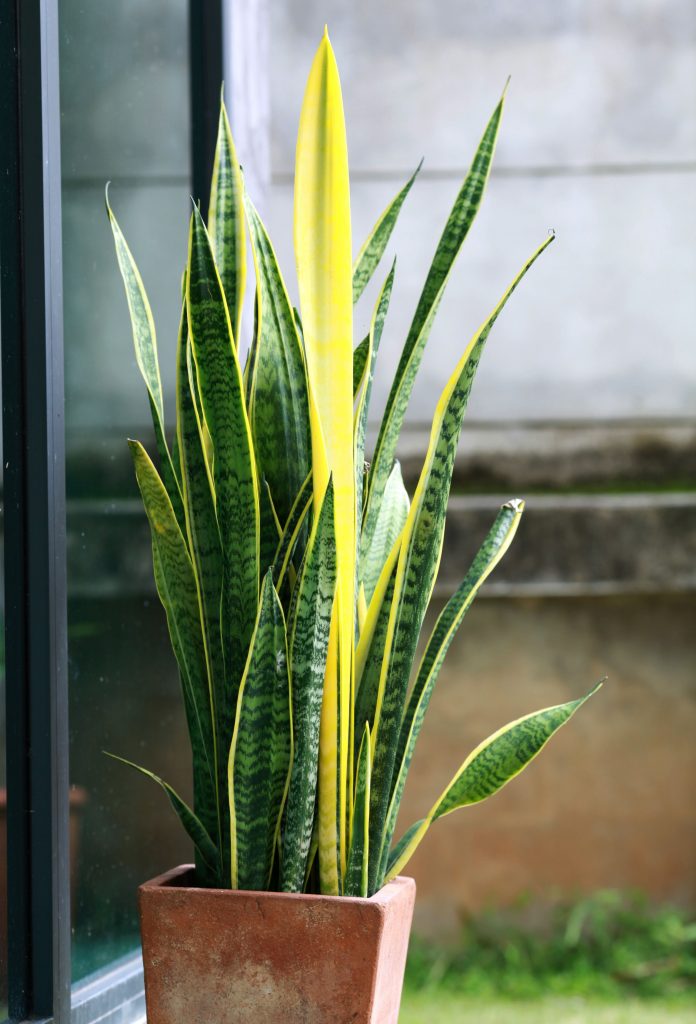
Snake Plant (Sansevieria)
- Light Requirement: Low to Medium
- Why it works: Its striking vertical lines fit modern professional aesthetics, and it is excellent at purifying office air by removing Volatile Organic Compounds (VOCs).
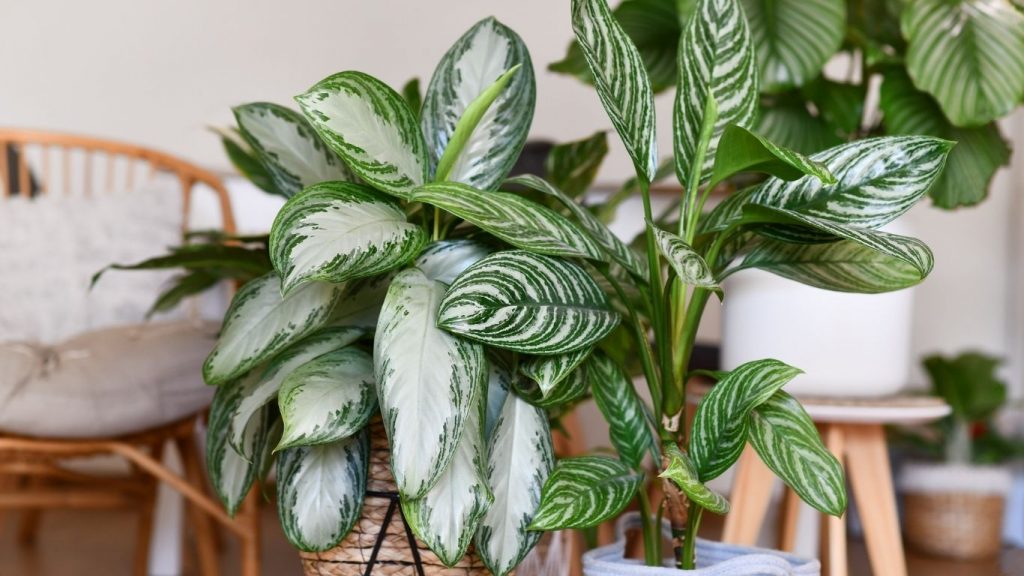
Aglaonema (Chinese Evergreen)
- Light Requirement: Low
- Why it works: It adds a sophisticated splash of patterned silver and green to the workspace, without requiring any direct sunlight.
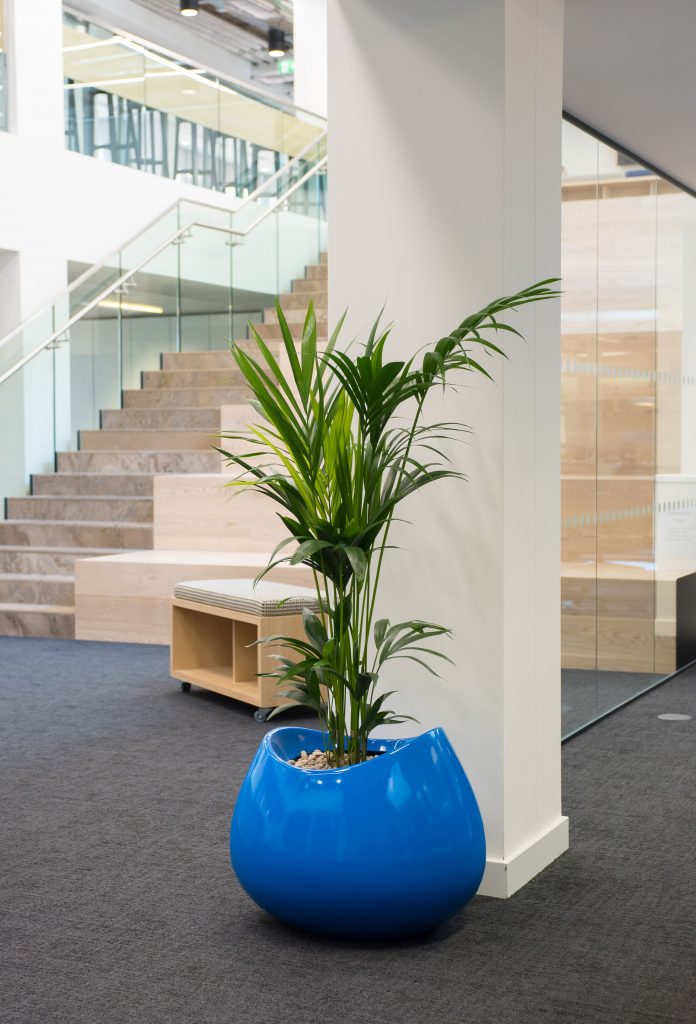
Kentia Palm
- Light Requirement: Indirect / Shaded
- Why it works: Widely considered the gold standard for office greenery, it provides a “luxe” professional look and can tolerate the dimmer corners of a large floor plate.
Functional Greenery: Plants as Natural Room Dividers
With the rise of neuro-inclusive design in 2026, offices are moving away from noisy, open-plan layouts. But, instead of glass partitions or heavy walls, companies are using office plants to create zones, naturally.
- Trough Planters: Line up rectangular troughs with tall Sansevieria or Bamboo Palms to create a visual and acoustic barrier between high-traffic walkways and deep work zones.
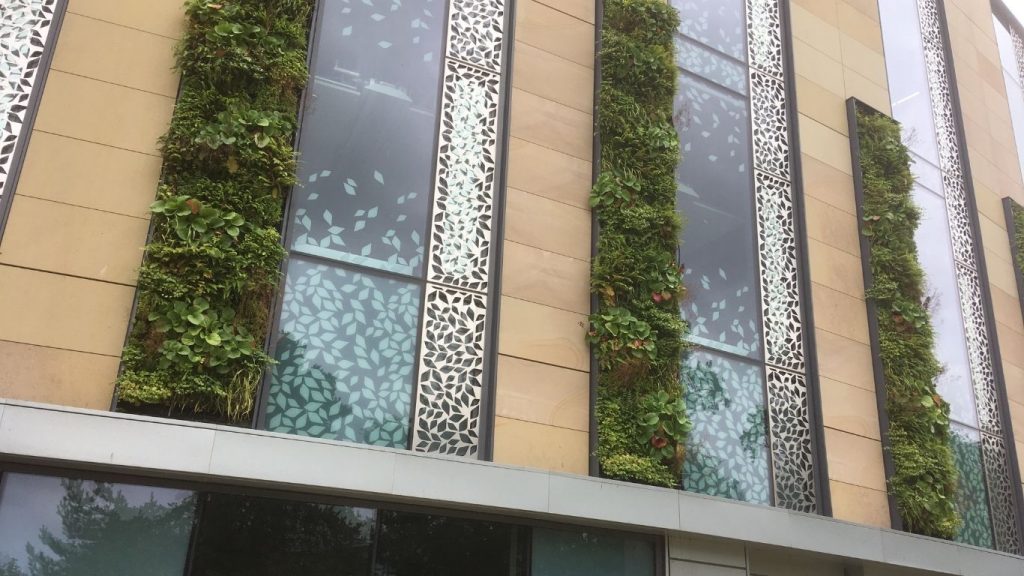
- Living Walls: For a 2026 statement, a floor-to-ceiling living wall can provide a stunning backdrop for a reception area while significantly dampening ambient noise.
- Ceiling Hangs: If floor space is at a premium, trailing Pothos or Philodendron from overhead mesh grids creates a canopy that makes cavernous ceilings feel more intimate.
2026 Trends: Commercial Containers and Sustainable Options
The container is just as important as the plant itself. In 2026, the basic plastic look is out. The new trends focus on:
- Sustainable Materials: Planters made from 100% recycled ocean plastic or biodegradable timber composites.
- Saturated Earth Tones: Moving away from clinical white. Think terracotta, forest green, and deep charcoal to ground the space.
- Smart Planters: Integrated self-watering reservoirs that reduce the frequency of maintenance visits and ensure plant health during long bank holiday weekends.
Styling for Focus and Wellbeing
Over the years, Biophilia and Biophilic Design have become increasingly popular as they help to support health and wellbeing amongst workers, by utilising natural elements. To help maximise employee focus, consider:
- The Green View: Position plants so they are within employees’ peripheral vision as they sit at their desks.
- Texture and Variety: Mix broad, glossy leaves (like Monstera) with feathery ferns. This visual complexity mimics a natural environment, helping to reset attention spans during high-stress tasks.
- Brand Alignment: Use bespoke coloured planters that reflect your brand’s palette, turning your greenery into a living extension of your company’s values.
Ready to Transform Your Workspace?
At Ambius, we do not just give you plants. We design living environments that help your business and your people thrive. Enquire with us today via form or via telephone 0808 256 4393.



Leave a Reply