
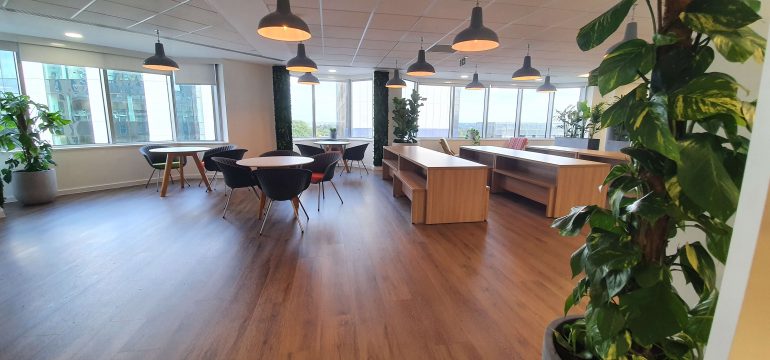
Spending up to 90% of our time indoors has created an “indoor generation” of workers, often disconnected from the benefits of nature. Long hours under artificial lights in an artificial environment remove a range of natural sensory inputs that our bodies crave and are directly linked to negative effects on human health and cognitive performance.
The solution is biophilic design, which is a strategic approach to reintroducing plants and a more natural-looking environment into our everyday spaces. It is not just an aesthetic change, but a scientifically supported method for dramatically improving employee health, boosting cognitive performance and enhancing emotional wellbeing. This article explores:
- Why we crave greenery and its benefits
- The architectural framework of biophilic design
- Building standards that help businesses adopt biophilic design
- How to turn biophilia theory into practice
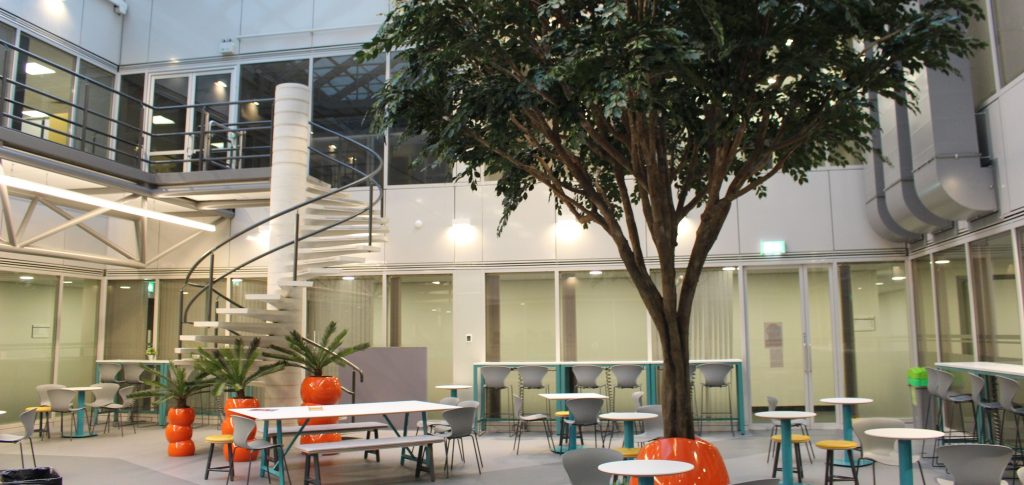
Why do we crave greenery and a natural environment?
The foundation of biophilic design rests on the biophilia hypothesis, popularised by biologist Edward O. Wilson in the 1980s, which suggests humans possess an innate, hereditary emotional connection to other living organisms. When we are denied this connection, our stress levels rise and our cognitive performance dips.
Two dominant theories explain how nature heals us:
- Stress Reduction Theory (SRT): Viewing natural environments triggers a positive emotional response and activates our parasympathetic nervous system, facilitating rapid recovery from physiological stress.
- Attention Restoration Theory (ART): Natural settings provide “soft fascinations”, which are complex yet effortless visual stimuli, that allow our brains to recover from the “directed attention fatigue” caused by intense office work.
1. The physiological payoff for stress and the heart
Recent experimental research using virtual reality (VR) and bio-monitoring sensors has provided solid evidence of the impact of nature on office workers. In a study comparing virtual biophilic offices with standard ones, researchers found significant physiological improvements:
- Heart rate variability (HRV): Participants in biophilic environments showed a 2.1% faster increase in RMSSD (a key indicator of stress relief) during recovery periods.
- Blood pressure: Workers exposed to indoor greenery and natural materials experienced significantly greater decreases in both systolic and diastolic blood pressure soon after completing stressful tasks.
- Immediate recovery: The restorative effects on the heart are almost immediate, with the greatest impact occurring within the first four minutes of exposure.
2. Gaining a mental edge with focus and creativity
Biophilic design not only improves our mood; it also helps us work more efficiently. By reducing the mental effort needed to navigate a sterile environment, we conserve mental resources for more complex tasks.
- Attention restoration: Brief “micro-breaks”, such as a 40-second view of a green roof, are sufficient to restore focus and improve task performance.
- Creative performance: The use of natural materials such as wood and stone has been associated with enhanced creative performance and improved problem-solving skills.
- Reduced anxiety: Views of landscapes and access to natural daylight are especially effective at lowering anxiety and improving overall job satisfaction.
How to enhance spaces using biophilic design principles
Biophilic design has three essential approaches that go beyond placing a few pot plants around an office:
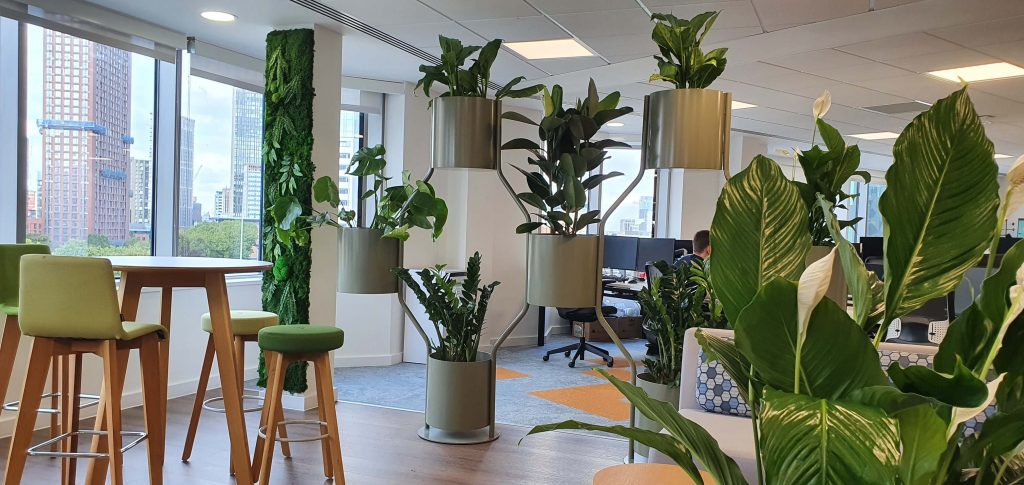
Nature in the space
This involves direct contact with natural elements.
- Air and ventilation: Windows that open and natural airflow variation reduce boredom and improve thermal comfort in warmer weather.
- Water: The presence of fountains or aquaria can reduce heart rates and enhance feelings of tranquillity.
- Daylight: Dynamic lighting patterns help regulate circadian rhythms, boosting sleep quality and productivity.
Natural analogues
These are indirect representations of nature through materials and patterns.
- Natural materials: Incorporating wood, bamboo or stone can reduce the carbon footprint while providing tactile and visual warmth.
- Biomorphic forms: Designing furniture or structures that mimic shells, leaves or spirals (fractals) increases visual interest and reduces stress.
Nature of the space
This focuses on spatial configurations that trigger evolved human survival instincts.
- Prospect and refuge: Providing open views (prospect) alongside safe, sheltered areas (refuge) creates a balance of pleasure and safety.
- Mystery: Using winding paths or translucent materials and slowly revealing a space induces a strong pleasure response and encourages exploration.
Building standards that help businesses adopt biophilic design
The strategic importance of biophilia is reflected in several international building standards, which provide rigorous, performance-based frameworks for integrating nature into workplaces.
The WELL building standard
The WELL standard, managed by the International WELL Building Institute (IWBI), is a global rating system focused on the health and wellbeing of building occupants. It treats biophilia as a central pillar of its “mind” and “light” concepts.
- Feature M02: Access to nature: This is a mandatory requirement for all WELL projects. It requires integrating nature into the project’s interior and exterior through design elements that facilitate direct access to the outdoor environment.
- Feature M02.1: Nature and place: Projects must include either indoor plants (potted, plant beds, or living walls), water features, or direct views of nature.
- Quantitative thresholds:
- Indoor greening: At least 1% of the floor area must be covered by plants.
- Living walls: At least one living wall must be installed on each floor.
- Sightlines: Natural elements must be within the direct line of sight of at least 75% of all workstations and meeting room seats.
- Proximity: Plants must be within 10m of all workstations.
- Performance verification: Unlike traditional commissioning, WELL certification requires on-site testing and measurements to ensure the building meets the intended air, water and light quality standards.
BREEAM and LEED frameworks
BREEAM (UK) and LEED (US) also integrate biophilic outcomes through their credit structures, but may not always use the term “biophilia” explicitly.
- BREEAM Health and Wellbeing: Credits are awarded for ensuring indoor comfort, adequate daylighting and views of nature, all of which are enhanced by indoor planting.
- BREEAM Land Use and Ecology: Encourages ecological enhancement and biodiversity net gain (BNG), which can include accessible on-site planting that increases human-nature interaction.
- LEED Indoor Environmental Quality (IEQ): Prioritises air quality, natural lighting and acoustics. Broad-leafed plants are recognised for their ability to soften acoustics and absorb sound in echo-prone open-plan offices.
How to turn biophilia theory into practice
Moving from theory to practice requires a detailed review of an office’s design and layout. Below is an audit checklist organised into three primary categories: incorporating nature, inspiration from nature and interacting with nature, that businesses can use to assess their current office design and possible improvements.
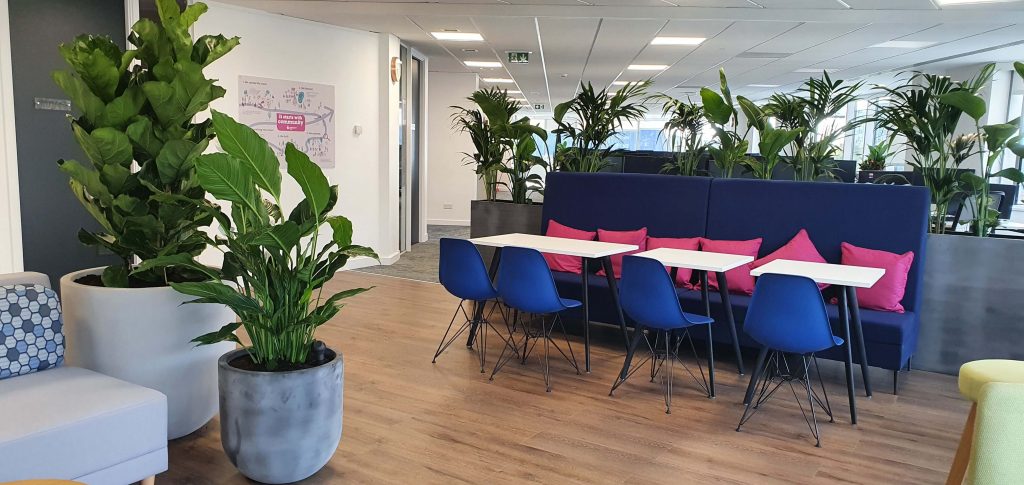
1. Incorporating nature
Focus: Bringing nature, phenomena and processes into the office.
- Vegetation coverage: Are there living green walls, potted plants, or indoor gardens that cover at least 1–2% of the floor or wall area?
- Air quality & movement: Does the office use operable windows or HVAC systems that simulate the subtle, non-rhythmic variability of natural airflow to reduce boredom?
- Dynamic lighting: Is there access to natural daylight via glass walls or skylights to regulate circadian rhythms and improve visual comfort?
- Visual connection: Can every workstation see at least one natural element (plants, water, or sky) to help restore attention during micro-breaks?
- Water features: Is there a presence of water, such as a fountain or aquarium, to increase feelings of tranquillity and lower heart rate?
- Monitoring systems: Are sensors used to track indoor environmental quality (IEQ), including CO2, PM2.5 and relative humidity?
2. Inspiration from nature
Focus: Using materials, patterns, and geometries that mimic the natural world.
- Material authenticity: Are surfaces primarily made of natural, minimally processed materials like wood, bamboo, or stone instead of purely synthetic plastics?
- Biomorphic forms: Do the furniture, structural supports, or wall patterns use organic shapes (shells, leaves or spirals) to increase aesthetic appeal?
- Complexity & order: Does the design incorporate fractal patterns (complex, repeating natural geometries) which have been shown to reduce stress?
- Natural imagery: In windowless areas, are there high-quality photographs, paintings, or digital displays of natural landscapes to provide “positive distractions”?
- Colour palette: Does the office use earth tones, blues and greens that evoke an emotional connection to the local ecosystem?
3. Interaction with nature
Focus: Organising the layout based on evolved human-nature relationships.
- Prospect: Are there open, long-distance views (ideally >6m) that allow employees to scan their environment, reducing feelings of confinement?
- Refuge: Are there semi-enclosed, sheltered spaces where workers can feel safe and focused, away from the main office flow?
- Transitional spaces: Are boundaries between “indoors” and “outdoors” blurred through the use of porches, atria, or foyers?
- Connection to place: Does the design incorporate indigenous materials or local landscape features to foster a “sense of place” and belonging?
- Mobility: Does the office layout encourage “promenading” or movement between different naturally designed scenes?
Why biophilic design matters for employees
mplementing even a few biophilic improvements can yield measurable health returns for employees in businesses. Research shows that enhancing office environments with these elements can lead to:
- Faster stress recovery: Significant increases in heart rate variability within the first four minutes of exposure.
- Lowered blood pressure: Greater decreases in blood pressure after stressful work tasks.
- Productivity gains: Increased self-estimated productivity and mental engagement when workers have views of vegetation.
- Reduced burnout: Lower instances of burnout and higher job satisfaction for office staff.
Installing plants in a biophilic-inspired office environment is a fundamental investment in human performance, translating environmental improvements directly into a healthier, more focused and more productive workforce.
| Find out more about incorporating plants into your office space to improve efficiency and wellbeing |



Leave a Reply