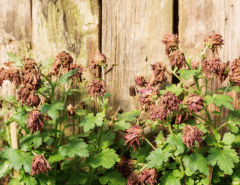
Imagine the hedges on your premises deteriorating in front of you. Are they dying from some form of disease or have they been attacked by box tree caterpillars, which are the larvae of the box tree moths (Cydalima perspectalis).
Although the box tree moth originates in the temperate and subtropical regions of East Asia (Japan, Korea, China), it is has spread over here and is now a big problem in the UK.

What are box tree moths?
Box tree moths are an invasive species which damage box plants (Buxus). Their caterpillars are the primary source of damage and are active throughout spring, summer and autumn. Due to them feeding on the leaves and stripping back the bark of the plant.

The caterpillars consume the leaves of box plants, often leaving them completely defoliated. This can give the appearance of the plant dying back but should not be confused with box blight.
What is box blight?
Box blight is a disease of box leaves and stems, which are caused by two closely related fungi. (Calonectria pseudonaviculata and Calonectria henricotiae).
How to spot an infestation?
You are likely to become aware of an infestation when you spot defoliation or webbing and caterpillars on your box plants. Recently hatched caterpillars are greenish/yellow in colour with black heads. As they mature they will grow to reach about 4cm in length with a greenish/yellow body. Also, they have thick black and thin white stripes along their length.
They munch on box leaves and produce webbing across their feeding area. Pupae will be hard to spot as they are concealed in cocoons of white webbing spun among the leaves and twigs of the plant. When the adult moths emerge they have white wings with a brown border.

Before:

After:
How to control an infestation
Box plants should be checked regularly from early spring onwards so that action can be taken a soon as an infestation is observed. Where practical, and for smaller infestations, then caterpillars can be removed by hand.
For bigger infestations then an intensive treatment is recommended to knock back the numbers of caterpillars. So pruning is essential within the treatment period to promote regrowth of the bushes and allow their recovery.
In our treatment programme Ambius plant experts will use a biological pesticide in the form of a naturally occurring microorganism. This is biodegradable and leaves no harmful residue. It is specific to caterpillar species and allows us to target the infestation without impacting other forms of wildlife, such as bees, that may rely on box plants for shelter or food. The caterpillars will ingest the bacterium, cease feeding and die within 24-72 hours of application.
How to avoid reinfestation
Due to the prevalence of this species and how quickly it is spreading in the UK, ongoing monitoring of box plants is advised. A moth pot and lure system can be used to attract any adult moths in the area and provide an early warning system of any reinfestation.