
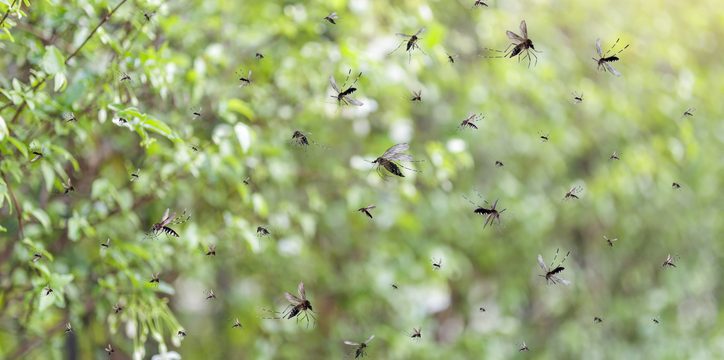
As warm weather starts to fade and we move into autumn, you may have noticed an increase in small grey or brown insects flying around the office. These are likely to be sciarid flies, also known as the fungus gnat, which are most active in the months of September, October and March. Often associated with indoor plants, these very common (and annoying) little insects can be found in many UK households and workplaces.
Fungus gnats are a people pest, not a plant pest and they normally indicate a plant in distress, rather than causing physical damage to the plant itself. Whilst adult flies can be a nuisance, it is worth remembering that they are not dangerous or harmful to people. Fungus gnats tend to cause more complaints than many other pests but with the right information, they can be easy to manage.
Fungus gnats look quite similar to fruit flies or shore flies, although they are more slender in appearance. They are grey or brown coloured insects, around 3-5mm long with long antennae, distinct dangly legs and large compound eyes. Their wings have an evident “Y” shaped vein. The adult flies don’t feed on living plant tissue, although their larvae will feed on algae and decaying plant matter in the soil, and in some conditions, the root hairs of young plants. Despite this, damage to plants is rare and tends to only occur when the flies are present in large numbers, and the plants are already under stress.
Fungus gnats are attracted to carbon dioxide, which is why adult flies become a nuisance to humans as they are drawn to the carbon dioxide in our breath. They also have a habit of not settling, so they continue to fly around people’s heads in an erratic matter, even if waved away. Fungus gnats pose no danger to humans – they are unable to bite or penetrate human skin as their mouthparts are only capable of taking in moisture from the soil.
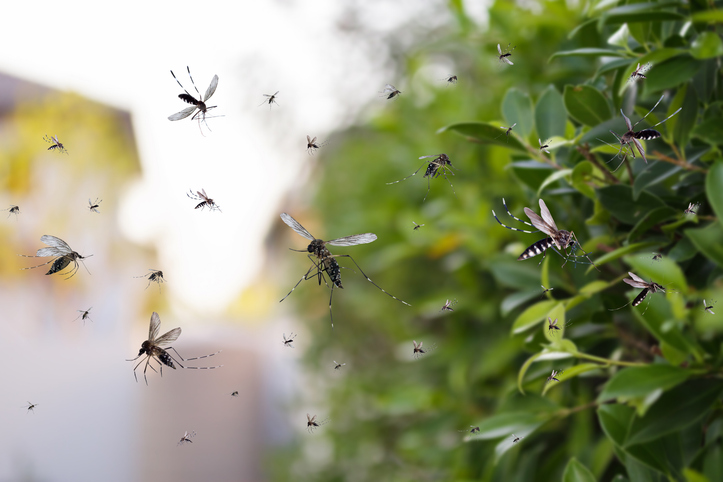
To manage fungus gnats, you should consider the following mnemonic: GROW.
- G – Groom – As well as grooming the more visual elements of a plant such as the leaves or flowers, you must consider the other elements of the display. The soil warrants particular attention. Fungus gnats lay their eggs in the top inch or so of the soil, feeding on moist algae – they are unable to burrow very deep. This is a good place to start to help tackle a new growth of flies. To help reduce the size of a gnat swarm later on, use top dressings that make it difficult for adult fungus gnats to get through and lay their eggs, or for newly emerged adults to get out. Dry materials, such as decorative stone or slate chippings are a good choice.
- R – Refresh – It is important not to let the top dressing sit unattended for long periods of time. Ensure you aerate and refresh top dressings regularly to prevent condensation under the soil, limiting the amount of moisture available for fungus gnats. Bear in mind that fungus gnats are drawn to both water and carbon dioxide, so avoid anything that could provide a moist habitat for flies, such as bark chips, and remember to clear any dead or decaying plant tissue.
- O – Observe – Knowing what to look out for is essential for all pest management. The main signs that indicate a desirable environment for fungus gnats to thrive are:
- A wet soil surface
- Badly-maintained top dressings
- Bad smells
- Empty drinks cups
- Signs of over watering
- W – Water – Fungus gnats prefer damp soil. One of the most effective prevention methods available is to use a subterranean irrigation system or hydro culture. This denies fungus gnats a habitat in which to breed and grow. The process of sub-irrigation delivers water direct to the roots of the plant, so the soil surface remains dry. Ambius’ best practice is to use an approved sub-irrigation system and their experts will be able to give advice on the approved systems available in your area. This method not only reduces the risk of fungus gnats, it also promotes healthy root development, more efficient fertiliser use and extended watering intervals.
Finally, as with all pest problems, management of the problem starts with understanding the lifecycle of the pest. The fungus gnats you are seeing now have spent the last several months developing in the soil. The adults you see now are the result of the adults you saw in the spring, having successfully bred. Adult fungus gnats have a short life – they emerge from the soil, seek a mate, lay their eggs in some damp soil and die. To stop them coming back next spring you need to take action now and plan some proactive pest management. There are some very effective soil-applied biological controls that parasitize gnat larvae and will significantly reduce the number of adults emerging in the future. These biological controls are easy to use and are, naturally, chemical free.
As with all pest problems, quick identification and elimination is key to reducing the impact of a swarm of fungus gnats. If you are in any doubt as to whether you have fallen victim to these flies, it’s best to call in the experts.
You can also join the conversation on social media with @AmbiusUK and #plantsatworkweek.



Leave a Reply